Damaged walls can make even the most beautifully styled home feel unfinished. If you’re searching for a clear, reliable DIY wall patching guide, you likely want straightforward steps that actually work—without unnecessary tools, confusing jargon, or costly mistakes. This article is designed to give you exactly that: practical, room-ready techniques to repair small holes, dents, and cracks so your walls look smooth, clean, and professionally finished.
We’ve carefully reviewed proven home care strategies and tested common patching methods to ensure the steps shared here are effective, beginner-friendly, and suitable for everyday homeowners. Instead of generic advice, you’ll find focused guidance that helps you choose the right materials, apply them correctly, and achieve seamless results.
Whether you’re prepping for a fresh coat of paint or simply restoring your walls to their original condition, this guide will walk you through the process with clarity and confidence.
Gathering Your Essential Tools and Materials
Once you’ve mastered the art of wall patching for that smooth finish, you’ll be ready to dive into the fun of transforming your space with creative ideas in our article on how to decorate your house – for more details, check out our How To Decorate My House Decoradhouse.
Before you even think about patching, gather the non-negotiables. You’ll need spackle, joint compound, a putty knife, utility knife, sanding block (with 120- and 220-grit sandpaper), a clean rag or sponge, and your chosen patch. Miss one item and you’ll be mid-repair, dust everywhere, making a hardware store run (we’ve all been there).
Spackle vs. Joint Compound: Spackle is thicker and dries fast—perfect for small nail holes and dents. Joint compound (also called “mud”) is smoother and better for larger holes, seam taping, or blending wide areas. If the damage is bigger than a doorknob dent, reach for joint compound.
Choosing Your Patch: Self-adhesive mesh patches are beginner-friendly. Metal-reinforced patches add strength for medium holes. The “California patch” uses scrap drywall for a seamless finish.
Tool Breakdown: A putty knife spreads compound, a utility knife trims edges, sanding blocks smooth layers, and a damp rag wipes dust.
Next up in your DIY wall patching guide: priming and paint matching—because repairs shouldn’t scream “I was patched.”
Prepping the Damaged Area for a Perfect Patch
Preparation is the real secret to an invisible repair. In fact, about 80% of a successful wall patch comes down to prep work (the patching itself is the easy part). If the surface isn’t clean and stable, the compound won’t bond properly—”adhesion” simply means how well one material sticks to another.
Step 1: Clean and Clear
Use a utility knife to remove loose debris, peeling paint, or crumbling drywall around the hole. Think of it like pulling weeds before planting flowers. If it’s flaky or soft, it has to go.
Step 2: Create a Solid Foundation
Lightly sand the surrounding area to scuff the surface. Sanding creates tiny scratches that help the patching compound grip better (smooth walls are surprisingly slippery).
Step 3: Wipe Down
Use a damp cloth to remove dust, then let the area dry completely. Skipping this step in any DIY wall patching guide is asking for cracks later.
Technique 1: Fixing Small Holes, Dents, and Nail Pops
The Right Tool for the Job
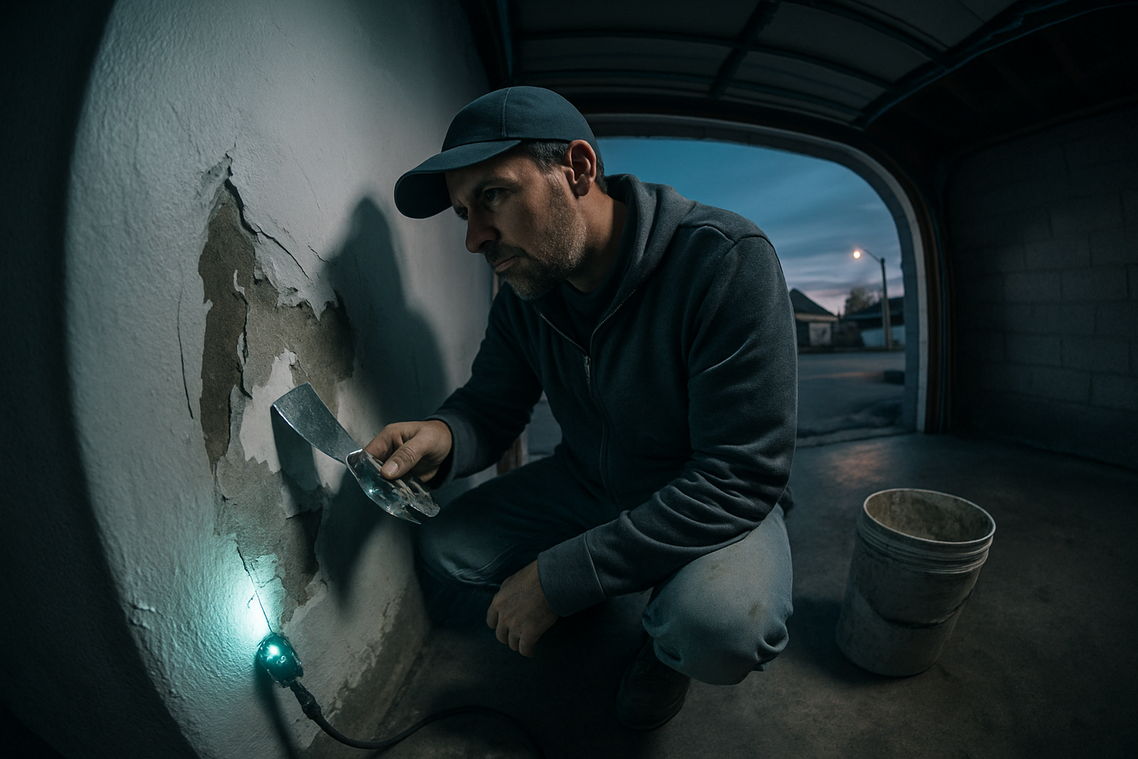
When it comes to tiny wall flaws, lightweight spackling compound beats traditional joint compound—hands down. Think of it as A vs. B: Spackle (A) dries fast, shrinks less, and is perfect for nail holes. Joint compound (B) works for larger areas but takes longer to dry and may require more sanding. For quick touch-ups, A wins (and saves your Saturday).
Lightweight spackle is designed for small repairs, typically holes under 1/2 inch. It spreads easily and sands smoothly, making it ideal for beginners following a DIY wall patching guide.
Application Process
Use a flexible putty knife and press a small amount of spackle firmly into the hole. The goal? Fill it completely, not just cover the surface. (Half-filled holes love to reappear after paint.)
The “Swipe and Smooth” Method
Draw the knife across the patch in one clean motion, feathering the edges so they blend into the wall. Less pressure on the outer edges creates a seamless finish.
Drying and Second Coats
Most patches need two thin coats. If the first coat turns solid white and feels dry to the touch—usually within 30 minutes—it’s ready. Apply the second coat lightly for a level surface.
For ongoing maintenance, explore seasonal home care strategies to protect your property year round.
Technique 2: Tackling Medium-Sized Holes (Up to 6 Inches)
I once had to fix a fist-sized hole in my hallway after a doorknob slammed into the wall (long story involving a dog and a delivery driver). At first, I thought I could just pack it with spackle and call it a day. I was wrong. For holes up to six inches, you need structure, not hope.
Choosing Your Patch
For this size, a self-adhesive mesh or metal-reinforced patch is your best bet. These patches provide structural integrity, meaning they reinforce the damaged area so the repair doesn’t sink or crack later. Some DIYers argue that layering compound alone is enough. In my experience, that shortcut often leads to visible dips over time—especially in high-traffic areas.
Applying the Patch
Next, center the patch directly over the hole and press firmly around the edges. Make sure the adhesive fully bonds to clean, dust-free drywall. (If it’s dusty, it won’t stick—ask me how I know.)
The First Coat of Compound
Using a wider drywall knife, spread a thin layer of joint compound over the entire patch. Extend it a couple of inches beyond the edges. This creates a gradual blend rather than a noticeable bump.
The Art of Feathering
Feathering means applying firm, even pressure as you pull the knife outward, thinning the compound at the edges so it transitions smoothly into the existing wall. Think of it like blending foundation makeup—harsh lines are the enemy.
Building Up Layers
After it dries completely, lightly sand and apply a second, wider, thinner coat. Sometimes a third is needed. Each time, expand the feathered area. This layered method, recommended in many a DIY wall patching guide, creates a seamless finish that disappears under paint.
Sanding, Priming, and Painting for an Invisible Finish
First, patience matters more than pressure. Wait until the final coat is completely dry before sanding; if it feels even slightly cool, it is still curing. Rushing now (we’ve all done it) creates dents and drag marks.
Next, use a fine-grit sanding block, 120-150 grit, and move lightly in small circular motions until the patch sits flush with the wall. “Flush” simply means perfectly level, no ridges.
Then prime. Joint compound is porous, while paint has sheen, or light reflection. Primer seals the spot so color matches.
Follow DIY wall patching guide.
Ready to Fix Your Walls the Right Way?
You came here looking for a clear, practical way to repair damaged walls without the guesswork. Now you know exactly how to assess the damage, choose the right materials, and follow a step-by-step process that actually works. No more staring at cracks, dents, or nail holes wondering how to make them disappear.
Wall damage isn’t just cosmetic—it makes your space feel unfinished and neglected. The good news? With the right approach and a little patience, you can restore your walls to a smooth, flawless finish and feel proud of your home again.
If you’re ready to take action, follow this DIY wall patching guide step by step and tackle that repair today. And if you want more room-specific cleaning tricks, smart maintenance routines, and practical home solutions, explore our expert-backed tips trusted by thousands of homeowners. Start now and turn small repairs into big confidence in your space.
 Founder & Creative Director
There is a specific skill involved in explaining something clearly — one that is completely separate from actually knowing the subject. Kaelith Kryndall has both. They has spent years working with highlight hub in a hands-on capacity, and an equal amount of time figuring out how to translate that experience into writing that people with different backgrounds can actually absorb and use.
Kaelith tends to approach complex subjects — Highlight Hub, Home Care Strategies and Fixes, Useful Stuff being good examples — by starting with what the reader already knows, then building outward from there rather than dropping them in the deep end. It sounds like a small thing. In practice it makes a significant difference in whether someone finishes the article or abandons it halfway through. They is also good at knowing when to stop — a surprisingly underrated skill. Some writers bury useful information under so many caveats and qualifications that the point disappears. Kaelith knows where the point is and gets there without too many detours.
The practical effect of all this is that people who read Kaelith's work tend to come away actually capable of doing something with it. Not just vaguely informed — actually capable. For a writer working in highlight hub, that is probably the best possible outcome, and it's the standard Kaelith holds they's own work to.
Founder & Creative Director
There is a specific skill involved in explaining something clearly — one that is completely separate from actually knowing the subject. Kaelith Kryndall has both. They has spent years working with highlight hub in a hands-on capacity, and an equal amount of time figuring out how to translate that experience into writing that people with different backgrounds can actually absorb and use.
Kaelith tends to approach complex subjects — Highlight Hub, Home Care Strategies and Fixes, Useful Stuff being good examples — by starting with what the reader already knows, then building outward from there rather than dropping them in the deep end. It sounds like a small thing. In practice it makes a significant difference in whether someone finishes the article or abandons it halfway through. They is also good at knowing when to stop — a surprisingly underrated skill. Some writers bury useful information under so many caveats and qualifications that the point disappears. Kaelith knows where the point is and gets there without too many detours.
The practical effect of all this is that people who read Kaelith's work tend to come away actually capable of doing something with it. Not just vaguely informed — actually capable. For a writer working in highlight hub, that is probably the best possible outcome, and it's the standard Kaelith holds they's own work to.