Standing in your new home with a mix of excitement and dread? I get it. You can’t even hang a picture, let alone tighten a loose cabinet handle.
Most new homeowners dive into the hardware store frenzy, wasting cash on gadgets they never use. Why buy a fancy drill when a simple hammer will do? The truth is, you only need a few important homeowner tools to tackle 90% of household tasks.
I’ve guided countless folks through setting up their first toolkit, and trust me, you don’t need to be Bob Vila to feel capable. This guide cuts through the noise, focusing on what’s actually useful. You’ll leave ready to handle life’s little home emergencies with ease.
Let’s make your toolkit simple and effective.
The ‘Day One’ Essentials: Your Non-Negotiable Tool Kit
Moving into a new home is exciting, but let’s be real, the first thing you need is a solid set of tools. No more borrowing from the neighbor (it’s awkward and frankly, a bit embarrassing). Here’s the bare minimum you absolutely need.
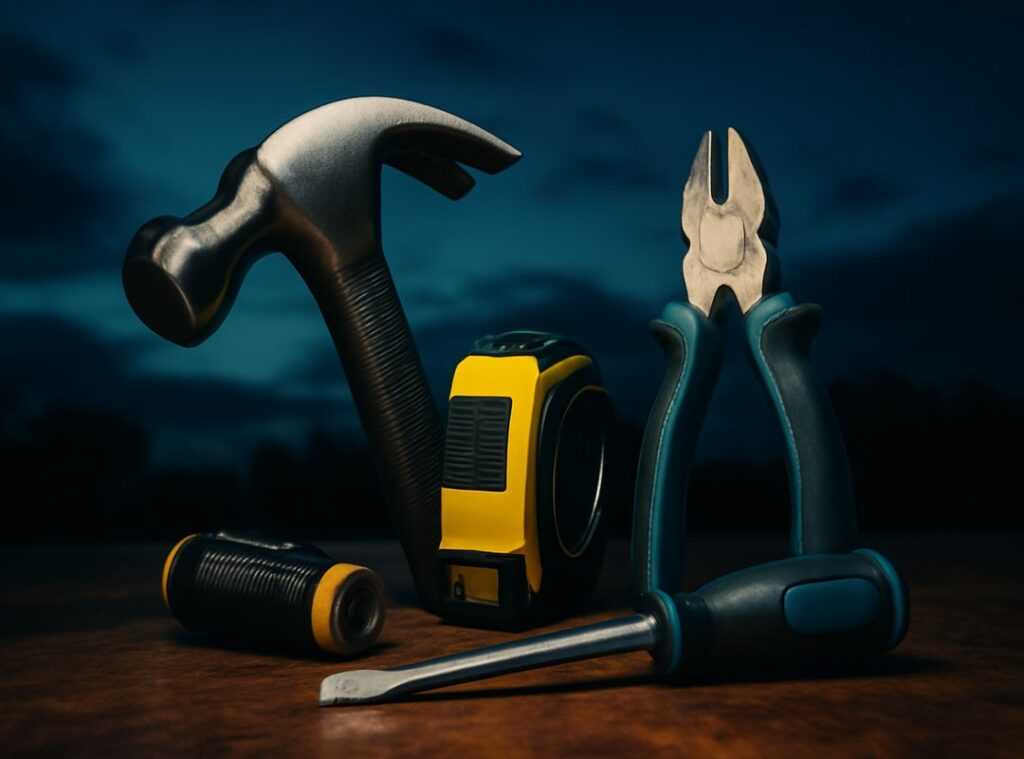
First up, a 16oz claw hammer. This isn’t just for hanging pictures. It’s versatile enough for small demolition jobs.
Look for one with an anti-vibration grip. Trust me, your hands will thank you.
Then there’s the multi-bit screwdriver. Forget the massive sets that take up space. A good multi-bit screwdriver includes Phillips and flathead bits, perfect for beginners.
It’s a space-saver and a sanity-saver.
You’ll also need a 25-foot tape measure. Not just any tape measure, though. One with a sturdy tape lock and clear markings.
You’ll use this for everything: measuring furniture, curtains, even art. It’s the unsung hero of your toolbox.
The adjustable wrench is next. Think of it as the one wrench to rule them all. Whether you’re tightening nuts on plumbing fixtures or assembling your latest IKEA purchase, this tool does the job.
Slip-joint pliers are like a robot’s strong hand. They grip, bend, and turn when your fingers just aren’t enough. These are important homeowner tools you’ll reach for more than you think.
And while we’re talking essentials, check out the top 10 must have kitchen utensils for your culinary adventures. Trust me, having the right tools makes all the difference.
Level Up: Important Tools for the Savvy Homeowner
Let’s talk about stepping up your home maintenance game. You know the feeling when something breaks and you scramble for tools that just don’t cut it? Been there.
It’s time to become a proactive homeowner, not just a reactive fixer. And it all starts with the right important homeowner tools.
First, the cordless drill/driver. This is the superhero of your toolbox. Not just any drill.
Get one with a rechargeable lithium-ion battery. Trust me, you’ll thank yourself later when you’re not tangled in cords. A drill spins, but a driver?
It grips screws and turns them in or out. You’ll find yourself assembling furniture in record time, drilling pilot holes like a pro, and driving screws with ease. It’s that versatile.
Of course, a drill without bits is like a car without gas. A good drill bit set is key. You need bits for different materials: wood, metal, and the ever-so-handy screwdriver bits.
A starter set should cover these basics. Don’t skimp on this. A well-chosen set transforms your drill into a multi-tasking beast.
Next, the stud finder. Ever tried hanging something heavy only to find out the wall can’t hold it? Yeah, not fun.
This tool saves you from the hassle and potential wall damage. Slide it across the wall, and it tells you where the studs are. It’s like a treasure map for your walls.
And let’s not forget the level. A 24-inch level is perfect for ensuring your shelves, pictures, and even appliances are straight. Eyeballing it is never as good as you think.
A level guarantees precision, and who doesn’t love a perfectly aligned space?
A utility knife or box cutter is another must-have. Opening boxes, scoring drywall, cutting carpet or vinyl flooring. It does it all.
But remember, safety first. A retractable blade is key to avoiding accidents. You don’t want to fumble with a dangerous blade.
For a deeper dive into these tools and more, check out this detailed guide. It offers takeaways that can turn any tool into an indispensable ally.
So, are you ready to level up your home maintenance skills? With these tools, you’re not just fixing problems. You’re preventing them.
Now that’s smart homeownership.
Ready To DIY?: Important Tools For Home Projects
So you want to dive into more than just tightening loose screws? Great choice! Getting ambitious means having the right tools.

Without them, you might get stuck. Let’s talk about a few must-haves.
First up, the putty knife. It’s your best friend for filling nail holes, scraping away flaking paint, or spreading wood filler. One small tool, endless uses.
I always say it makes my DIY work look almost professional. Ever notice how little touches make a big difference?
Now, the caulk gun. Don’t let it intimidate you. Get a drip-free model for sealing gaps around windows, doors, and bathtubs.
It prevents drafts and water damage. Why deal with winter chills or leaks when you can fix them easily?
For those times you need to cut something, a small hand saw or an oscillating multi-tool is key. They handle wood trim and PVC pipes like a charm, without requiring a huge power saw. The multi-tool is a versatile, modern solution (think for cutting).
Then, there’s the underrated magic of clamps. Think of them as a second pair of hands. They hold pieces together while glue dries.
Fix a wobbly chair leg or a broken picture frame without losing your mind.
Lastly, we can’t forget about the Allen key/hex wrench set. Remember the frustration of assembling flat-pack furniture with those tiny wrenches? A full set saves you from that headache.
Trust me, it’s a lifesaver in a world of self-assembly furniture.
If you’re tight on space, these tools won’t clutter your home. Speaking of which, you might want to check out space saving furniture for small living areas. Keeps everything tidy while you flex your DIY muscles.
Having these important homeowner tools makes tackling projects not just possible but enjoyable. So, what are you waiting for? Grab your tools and get started.
Safety First: Gear You Can’t Overlook
Being a capable homeowner isn’t just about fixing things. It’s about keeping yourself safe while doing it. Let’s be honest: safety is non-negotiable. Safety glasses are a must-have.
They protect your eyesight from dust and debris. And they’re cheap. Seriously, no excuse to skip them.
Next up, work gloves. You need these if you’re tired of splinters and cuts. A durable pair keeps your hands in one piece (literally) on any project.
Ever stood on a wobbly chair reaching for something high? That’s a fall waiting to happen. A sturdy step stool or ladder is important for changing lightbulbs and reaching shelves safely.
These are the important homeowner tools you shouldn’t ignore. Your body will thank you.
Take Charge of Your Home with These Tools
Feeling overwhelmed by home maintenance chores? I get it. But here’s the good news: Your search for important homeowner tools is over.
This curated list is your answer to tackling those daunting tasks. When you own these tools, you’re not just prepared; you’re empowered. You become that confident homeowner everyone admires.
So what’s the next step? Simple. Start building your ‘Day One’ kit this weekend.
You’ll be amazed at how capable you feel when a small problem arises. Ready to transform your home maintenance game? Dive in now and see the change firsthand.
 Home Care Specialist & Operations Manager
Steven Washingtonavilo writes the kind of useful stuff content that people actually send to each other. Not because it's flashy or controversial, but because it's the sort of thing where you read it and immediately think of three people who need to see it. Steven has a talent for identifying the questions that a lot of people have but haven't quite figured out how to articulate yet — and then answering them properly.
They covers a lot of ground: Useful Stuff, Daily Home Maintenance Tips, Room-Specific Cleaning Techniques, and plenty of adjacent territory that doesn't always get treated with the same seriousness. The consistency across all of it is a certain kind of respect for the reader. Steven doesn't assume people are stupid, and they doesn't assume they know everything either. They writes for someone who is genuinely trying to figure something out — because that's usually who's actually reading. That assumption shapes everything from how they structures an explanation to how much background they includes before getting to the point.
Beyond the practical stuff, there's something in Steven's writing that reflects a real investment in the subject — not performed enthusiasm, but the kind of sustained interest that produces insight over time. They has been paying attention to useful stuff long enough that they notices things a more casual observer would miss. That depth shows up in the work in ways that are hard to fake.
Home Care Specialist & Operations Manager
Steven Washingtonavilo writes the kind of useful stuff content that people actually send to each other. Not because it's flashy or controversial, but because it's the sort of thing where you read it and immediately think of three people who need to see it. Steven has a talent for identifying the questions that a lot of people have but haven't quite figured out how to articulate yet — and then answering them properly.
They covers a lot of ground: Useful Stuff, Daily Home Maintenance Tips, Room-Specific Cleaning Techniques, and plenty of adjacent territory that doesn't always get treated with the same seriousness. The consistency across all of it is a certain kind of respect for the reader. Steven doesn't assume people are stupid, and they doesn't assume they know everything either. They writes for someone who is genuinely trying to figure something out — because that's usually who's actually reading. That assumption shapes everything from how they structures an explanation to how much background they includes before getting to the point.
Beyond the practical stuff, there's something in Steven's writing that reflects a real investment in the subject — not performed enthusiasm, but the kind of sustained interest that produces insight over time. They has been paying attention to useful stuff long enough that they notices things a more casual observer would miss. That depth shows up in the work in ways that are hard to fake.