
When an unexpected power outage, severe storm, or plumbing failure hits, the difference between panic and preparedness often comes down to having the right supplies on hand. If you’re searching for a clear, practical guide to home emergency kit essentials, you’re in the right place. This article is designed to help you confidently prepare your home with exactly what you need—no guesswork, no unnecessary extras.
Many homeowners either overpack with items they’ll never use or overlook critical supplies that matter most in real emergencies. Here, you’ll find a room-by-room and scenario-based breakdown of what to include, how to store it, and how to maintain it so everything works when you need it most.
Our guidance is based on established home safety recommendations, real-world home management experience, and proven preparedness strategies. By the end, you’ll have a streamlined, reliable emergency kit tailored to your household’s needs.
One minute the sky is clear; the next, your phone blares a storm alert like something out of Twister. The lights flicker, then go out—no Wi‑Fi, no coffee, just silence that feels a little too quiet. Most households assume outages last minutes, not hours, and very few are ready for a full 72-hour disruption. That’s the gap this guide closes. Think of it as your practical, no-drama checklist for home emergency kit essentials, built from real-world experience managing homes when the unexpected hits. Preparation isn’t panic; it’s peace of mind (and fewer “I should’ve bought batteries” regrets) when storms strike.
Core Survival Supplies: Water and Food Essentials
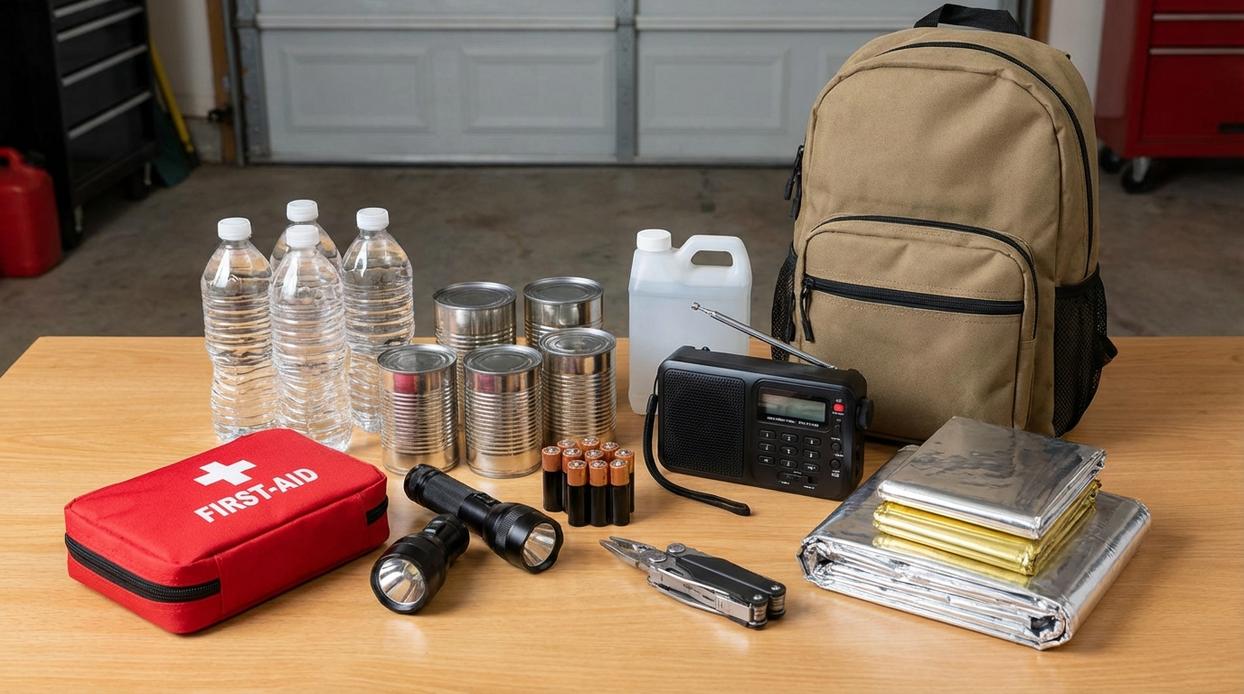
Water is your absolute priority in any emergency. The standard rule is one gallon per person per day for at least three days (ready.gov). That covers drinking and basic sanitation. Store commercially bottled water in its original, sealed containers and keep it in a cool, dark place. Avoid reusing old milk jugs (they degrade and can leak—never fun when you need it most). Check expiration dates twice a year and rotate your supply.
Non-Perishable Food Basics
Choose foods that require no cooking or refrigeration. Smart options include canned meats, fruits, vegetables, protein bars, dried fruit, nuts, and peanut butter. These items are shelf-stable, calorie-dense, and easy to portion. If the power goes out, you won’t be scrambling to figure out dinner (literally).
Don’t forget essential tools: a manual can opener, disposable utensils, and paper plates. They’re small but critical additions to your home emergency kit essentials.
Special considerations matter. Pack formula, baby food, and diapers for infants. Include easy-to-chew foods and medications for elderly family members. And for pets, store extra food and water—at least a three-day supply (ASPCA). Planning ahead reduces stress when it counts most.
When an emergency strikes, the air can feel heavy and metallic, and stress settles in fast. That’s why preparing home emergency kit essentials ahead of time matters.
First-Aid Kit
You can buy a comprehensive pre-made kit or build your own. Either way, include:
- Assorted bandages (for small cuts and blisters)
- Sterile gauze and adhesive tape
- Antiseptic wipes that sting slightly but keep infection away
- Pain relievers
- A 7-day supply of any prescription medications
A well-stocked kit keeps minor injuries from becoming major problems (because a tiny cut can turn angry and red overnight).
Sanitation Supplies
Hygiene prevents illness, especially when water access is limited. Pack moist towelettes for that cool, clean swipe on sticky skin, garbage bags with plastic ties for waste control, and hand sanitizer with that sharp, alcohol scent that signals protection. Clean hands reduce the spread of bacteria and viruses (CDC).
Personal Hygiene
Toothbrushes, toothpaste, soap, and feminine supplies restore a sense of normalcy. The familiar minty foam or fresh soap scent can calm nerves more than you’d expect. Store everything neatly using tips from smart storage solutions to maximize small spaces so supplies stay dry and easy to grab when every second counts.
Essential Tools, Lighting, and Communication
Lighting is not the place to cut corners. “Please don’t use candles,” a local fire captain once told me. “We respond to more house fires after storms than you’d think.” Open flames tip easily, especially when kids or pets are stressed. Instead, pack crank-powered or battery-operated flashlights and a headlamp for hands-free tasks (you’ll thank yourself when flipping a breaker). Store extra batteries separately or turn them around inside the device to prevent drain.
For communication, a NOAA Weather Radio is critical. “When the grid goes down, this is how we reach you,” an emergency manager explained. Choose a crank or battery-powered model and keep a whistle to signal for help.
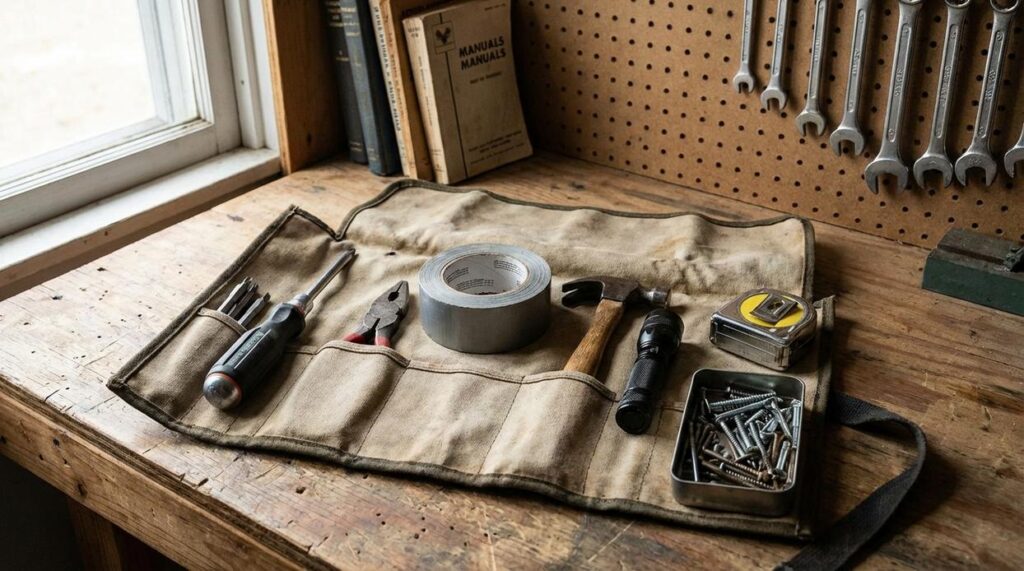
Utility and repair tools matter, too. Keep a wrench or pliers to turn off water or gas only if you smell gas or are instructed. A multi-tool handles small fixes without clutter.
Safety gear rounds out your home emergency kit essentials. Include:
- Dust masks to filter contaminated air
- Plastic sheeting and duct tape to seal windows and doors
“If officials say ‘shelter in place,’ this buys you time,” a public health nurse said. Preparation isn’t panic; it’s practical. And when the lights flicker, you’ll be ready.
Remember, emergencies are noisy, confusing, and dark. The right tools cut through that chaos. As one neighbor put it, “Gear gives you options.” Keep everything in one labeled bin so you can grab it fast. Small steps now prevent big regrets later. Stay calm and prepared.
Important Documents, Cash, and Comfort Items
Have you ever tried replacing a birth certificate in a hurry? It’s not exactly a relaxing afternoon task. That’s why, first and foremost, you should copy critical paperwork—insurance policies, passports, medical records—and store them in a waterproof, portable container. Better yet, scan them onto a password-protected USB drive (think of it as a mini digital safe in your pocket). If your house is part of your home emergency kit essentials, your documents should be too.
Next, consider this: what happens when card readers and ATMs go dark? Electronic payment systems and GPS can fail during outages. Keep small bills on hand and add paper maps of your local area. Yes, actual paper (old-school, but reliable).
Finally, don’t overlook comfort. Long waits feel longer without distractions. Pack books, puzzles, or a favorite board game—especially for kids. And of course, include sleeping bags or warm blankets for everyone. Staying calm is half the battle.
Your kit is ready. You’ve built more than a box of supplies—you’ve created CONTROL in the middle of chaos. That low-grade anxiety of “What if?” is replaced with a clear, practiced plan. While others stop at tossing random home emergency kit essentials into a bin, you’ve designed a system: organized, labeled, and tailored to your household (including pets and prescriptions competitors often overlook).
Now take the final steps:
• Store it in a cool, dark, accessible spot near an exit.
• Set a six-month calendar reminder to refresh food, water, medications, and batteries.
Preparedness isn’t panic. It’s peace of mind, maintained.
Be Ready Before the Unexpected Happens
You came here to understand exactly what belongs in your home emergency kit essentials, and now you have a clear, practical roadmap to prepare your home with confidence. Instead of guessing what you might need in a crisis, you can now build a kit that protects your family, reduces stress, and keeps small emergencies from turning into major disruptions.
The real pain point isn’t just the storm, power outage, or unexpected accident — it’s the panic that comes from not feeling prepared. Scrambling for supplies when time matters most is overwhelming. Having the right items ready gives you control, clarity, and peace of mind.
Now it’s time to take action. Don’t wait for the next emergency alert. Start assembling your kit today, check off the essentials, and store everything in an easy-to-access location. If you want more practical, room-by-room home strategies trusted by thousands of organized homeowners, explore our expert-backed guides and step-by-step checklists now. Get prepared today so you’re never caught off guard tomorrow.
 Home Care Specialist & Operations Manager
Steven Washingtonavilo writes the kind of useful stuff content that people actually send to each other. Not because it's flashy or controversial, but because it's the sort of thing where you read it and immediately think of three people who need to see it. Steven has a talent for identifying the questions that a lot of people have but haven't quite figured out how to articulate yet — and then answering them properly.
They covers a lot of ground: Useful Stuff, Daily Home Maintenance Tips, Room-Specific Cleaning Techniques, and plenty of adjacent territory that doesn't always get treated with the same seriousness. The consistency across all of it is a certain kind of respect for the reader. Steven doesn't assume people are stupid, and they doesn't assume they know everything either. They writes for someone who is genuinely trying to figure something out — because that's usually who's actually reading. That assumption shapes everything from how they structures an explanation to how much background they includes before getting to the point.
Beyond the practical stuff, there's something in Steven's writing that reflects a real investment in the subject — not performed enthusiasm, but the kind of sustained interest that produces insight over time. They has been paying attention to useful stuff long enough that they notices things a more casual observer would miss. That depth shows up in the work in ways that are hard to fake.
Home Care Specialist & Operations Manager
Steven Washingtonavilo writes the kind of useful stuff content that people actually send to each other. Not because it's flashy or controversial, but because it's the sort of thing where you read it and immediately think of three people who need to see it. Steven has a talent for identifying the questions that a lot of people have but haven't quite figured out how to articulate yet — and then answering them properly.
They covers a lot of ground: Useful Stuff, Daily Home Maintenance Tips, Room-Specific Cleaning Techniques, and plenty of adjacent territory that doesn't always get treated with the same seriousness. The consistency across all of it is a certain kind of respect for the reader. Steven doesn't assume people are stupid, and they doesn't assume they know everything either. They writes for someone who is genuinely trying to figure something out — because that's usually who's actually reading. That assumption shapes everything from how they structures an explanation to how much background they includes before getting to the point.
Beyond the practical stuff, there's something in Steven's writing that reflects a real investment in the subject — not performed enthusiasm, but the kind of sustained interest that produces insight over time. They has been paying attention to useful stuff long enough that they notices things a more casual observer would miss. That depth shows up in the work in ways that are hard to fake.