If you’re looking for practical, reliable ways to keep your home clean, organized, and beautifully maintained, you’re in the right place. This article is designed to give you clear, room-by-room strategies, smart daily habits, and styling insights that make home care feel manageable—not overwhelming. Whether you’re tackling stubborn kitchen grime, refreshing your living space, or building better maintenance routines, you’ll find solutions that are realistic and easy to apply.
We’ve compiled these tips using proven cleaning methods, tested organization systems, and expert-backed maintenance practices that actually work in real homes. From choosing the right essential household tools to creating efficient cleaning schedules, every recommendation is focused on saving you time while delivering noticeable results.
By the end, you’ll have a practical plan to simplify upkeep, protect your space, and create a home that feels both functional and inviting—without adding unnecessary stress to your day.
The Daily Cleaning Crew: Tools for Everyday Upkeep
Microfiber Cloths: The versatile workhorse for dusting, wiping counters, and cleaning glass without streaks. Compared with paper towels, they trap dust and bacteria in their tiny fibers instead of pushing it around (which means fewer repeat passes). Because they are reusable, you save money and cut waste over time.
All-Purpose Cleaner: A go-to spray for quick cleanups on various surfaces. However, not all formulas are equal. pH-neutral options clean without stripping finishes, whereas harsh alkaline sprays can dull wood or stone. Think of it as gentle skincare for your countertops.
Cordless Stick Vacuum: The key to effortless floor maintenance. Unlike bulky uprights, a cordless model grabs crumbs, pet hair, and hallway grit in minutes. If you have high-traffic zones, convenience beats power every time (no one wants to wrestle a cord before coffee).
Broom and Dustpan: Essential for sweeps in the kitchen and entryways. A dustpan with a rubber lip sits flush with the floor, so debris slides in instead of under. Broom versus vacuum? For spills like rice or cat litter, the broom wins on speed.
Dish Soap and Sponges/Brushes: Beyond dishes, a dish soap cuts grease on stovetops, cabinets, and tools. Diluted in warm water, it rivals specialty degreasers. Meanwhile, sanitize sponges regularly by microwaving damp ones for one minute. These are essential household tools.
The Deep-Cleaning Arsenal: For More Intensive Tasks
When surface cleaning isn’t enough, you need the HEAVY HITTERS. Not all tools are created equal, and choosing the right one can mean the difference between a quick refresh and a full reset.
A Quality Mop and Bucket: Spin mop vs. flat mop—what’s the difference? Spin mops are ideal for tile and vinyl because they rinse and wring easily, handling excess water without soaking grout. Flat mops, on the other hand, are better for hardwood since they distribute moisture evenly and reduce warping risk. If you’ve ever seen hardwood floors buckle, you already know: WATER CONTROL MATTERS.
Full-Sized Vacuum Cleaner: Stick vacuums are convenient, but for deep-cleaning carpets and large areas, a full-sized model wins. Look for strong suction and attachments for upholstery and tight crevices (those couch crumbs won’t stand a chance). Attachments turn one machine into a multi-surface solution.
Scrub Brushes: A small brush vs. a large one? Small brushes tackle grout lines and faucet bases; larger ones handle tile walls and tubs. Having both saves time and elbow grease.
Squeegee: The secret weapon for streak-free glass. Start at the top and pull downward in smooth, overlapping strokes—wipe the blade between passes for a crystal-clear finish.
Specialized Cleaners: A toilet bowl cleaner disinfects where all-purpose sprays fall short, while a kitchen degreaser cuts through baked-on residue. These aren’t luxuries—they’re essential household tools for serious cleaning power.
The Basic Repair Kit: Your First Line of Defense

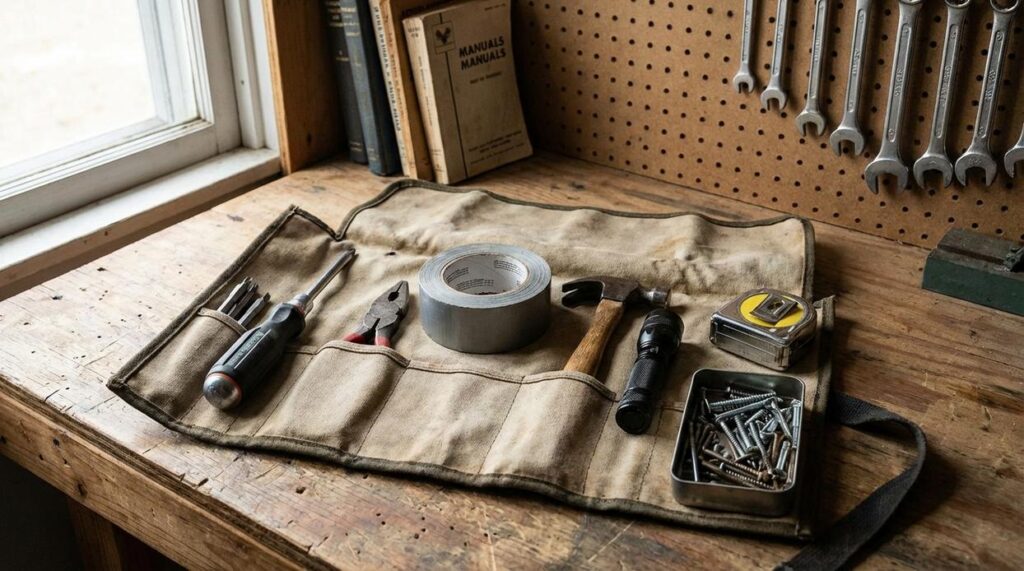
If you only build one toolkit in your lifetime, make it this one. I firmly believe these are the essential household tools every home should have before buying fancy gadgets (yes, even before that trendy power drill).
Multi-Bit Screwdriver: If I had to choose just one tool, this would be it. A ratcheting version—meaning it turns continuously without resetting your grip—with interchangeable Phillips and flathead bits covers nearly every quick fix. From tightening cabinet handles to assembling flat-pack furniture (we’ve all been there), it’s NON-NEGOTIABLE.
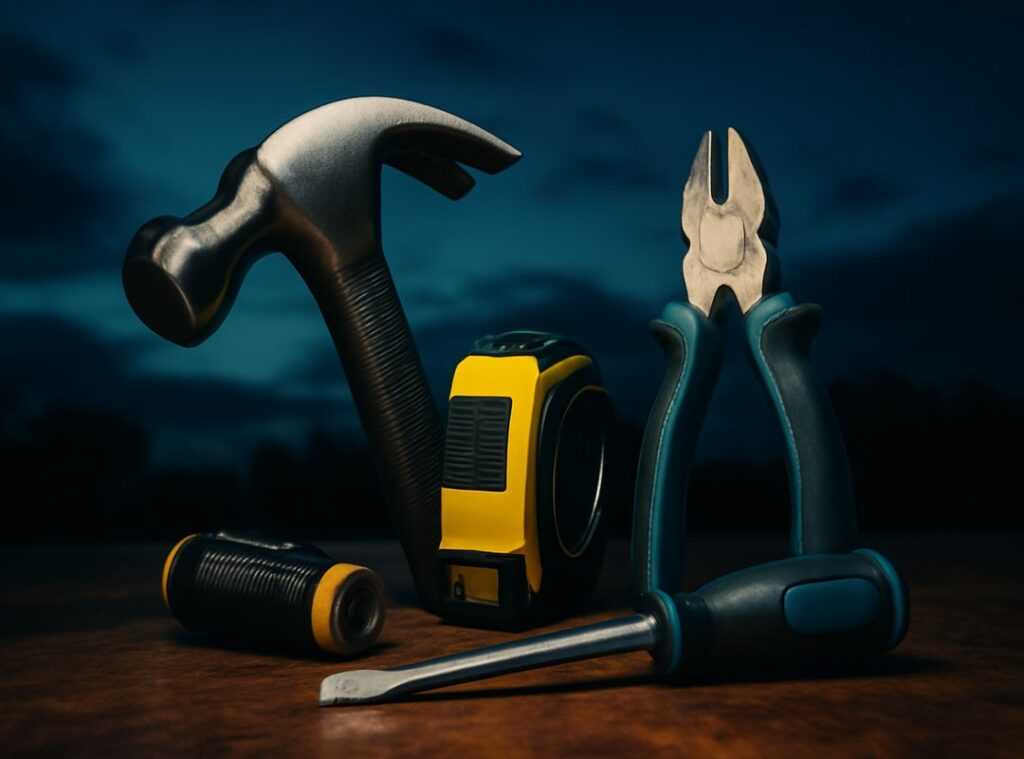
Hammer: A 16-ounce claw hammer hits the sweet spot between control and power. The claw side pulls nails; the flat face drives them in. Some argue you won’t use it often in apartments. I disagree. Hanging art, tapping boards into place, minor disassembly—it earns its keep.
Tape Measure: A 25-foot locking tape measure is standard for a reason. The locking mechanism holds the blade in place while you measure solo. Pro tip: measure twice, buy once. It saves money and arguments.
Pliers (Set of 2): Needle-nose pliers reach tight spaces; slip-joint pliers grip and turn nuts and bolts. Together, they’re small but MIGHTY.
Adjustable Wrench: Instead of owning multiple fixed wrenches, this single tool adjusts to various bolt sizes—perfect for leaky faucets or furniture assembly.
Utility Knife: Choose one with retractable blades for safety. It slices boxes, drywall, and packaging cleanly.
Level: A torpedo level keeps shelves and frames perfectly straight. Crooked décor is distracting (and yes, people notice). For bigger upgrades, read a beginners guide to choosing energy efficient appliances.
Outdoor and Seasonal Essentials
I learned the hard way that outdoor upkeep isn’t optional. One summer, my tomatoes wilted because my old hose cracked mid-heatwave (of course it did). A Durable Garden Hose with Nozzle quickly became one of my essential household tools, perfect for watering plants, washing cars, and blasting pollen off the patio.
Work Gloves are another must. After one blister-filled afternoon pulling weeds barehanded, I never skipped them again.
When autumn hit, I underestimated the leaf situation. A Leaf Rake / Snow Shovel isn’t just seasonal clutter; it’s prevention against slippery walkways and clogged drains.
And don’t overlook a Step Stool or Ladder. Changing bulbs and clearing gutters safely beats balancing on a chair (lesson learned, channeling my inner Home Alone mishap).
Keep Your Home Running Smoothly Every Day
You came here looking for practical, realistic ways to keep your home cleaner, more organized, and easier to manage. Now you have simple strategies, room-by-room techniques, and daily habits that make maintaining your space feel less overwhelming and far more achievable.
The truth is, most household stress comes from small problems piling up — clutter that builds, grime that spreads, and routines that fall apart. With the right systems and the right essential household tools, you can prevent those frustrations before they take over your space.
Don’t let mess and maintenance steal your time or peace of mind. Start applying these tips today, refresh your cleaning routine, and upgrade your toolkit with reliable essential household tools that make every task faster and easier.
Ready for a home that feels calm, clean, and under control? Explore more expert-backed home care strategies now and take the first step toward a space that truly works for you.
 Home Care Specialist & Operations Manager
Steven Washingtonavilo writes the kind of useful stuff content that people actually send to each other. Not because it's flashy or controversial, but because it's the sort of thing where you read it and immediately think of three people who need to see it. Steven has a talent for identifying the questions that a lot of people have but haven't quite figured out how to articulate yet — and then answering them properly.
They covers a lot of ground: Useful Stuff, Daily Home Maintenance Tips, Room-Specific Cleaning Techniques, and plenty of adjacent territory that doesn't always get treated with the same seriousness. The consistency across all of it is a certain kind of respect for the reader. Steven doesn't assume people are stupid, and they doesn't assume they know everything either. They writes for someone who is genuinely trying to figure something out — because that's usually who's actually reading. That assumption shapes everything from how they structures an explanation to how much background they includes before getting to the point.
Beyond the practical stuff, there's something in Steven's writing that reflects a real investment in the subject — not performed enthusiasm, but the kind of sustained interest that produces insight over time. They has been paying attention to useful stuff long enough that they notices things a more casual observer would miss. That depth shows up in the work in ways that are hard to fake.
Home Care Specialist & Operations Manager
Steven Washingtonavilo writes the kind of useful stuff content that people actually send to each other. Not because it's flashy or controversial, but because it's the sort of thing where you read it and immediately think of three people who need to see it. Steven has a talent for identifying the questions that a lot of people have but haven't quite figured out how to articulate yet — and then answering them properly.
They covers a lot of ground: Useful Stuff, Daily Home Maintenance Tips, Room-Specific Cleaning Techniques, and plenty of adjacent territory that doesn't always get treated with the same seriousness. The consistency across all of it is a certain kind of respect for the reader. Steven doesn't assume people are stupid, and they doesn't assume they know everything either. They writes for someone who is genuinely trying to figure something out — because that's usually who's actually reading. That assumption shapes everything from how they structures an explanation to how much background they includes before getting to the point.
Beyond the practical stuff, there's something in Steven's writing that reflects a real investment in the subject — not performed enthusiasm, but the kind of sustained interest that produces insight over time. They has been paying attention to useful stuff long enough that they notices things a more casual observer would miss. That depth shows up in the work in ways that are hard to fake.