
I’ve helped hundreds of homeowners figure out which projects actually matter for their space.
You’re probably staring at a list of things you want to fix or change in your home. Maybe you’re not sure where to start. Or you’re worried about spending money on the wrong thing.
Here’s what I know: most people pick projects based on what looks good on Pinterest. That’s not how you build a home that works for you.
I put together the mrshometips house guide by masterrealtysolutions to give you a better way forward. It’s based on what actually works when you’re trying to improve your living space without wasting time or money.
This isn’t about doing everything at once. It’s about knowing which projects to tackle first and how to budget for them without second-guessing yourself.
You’ll get a clear framework for prioritizing what matters most in your home. I’ll show you how to plan projects that deliver real value and make your space work better for how you actually live.
No fluff. No overwhelming lists of possibilities.
Just a straightforward approach to making your home better, one smart decision at a time.
The Foundation: Strategic Planning for Any Project
I’ll be honest with you.
Most people skip the planning part and jump straight into picking paint colors or browsing tile samples.
Then they wonder why their project goes over budget or doesn’t actually solve the problem they started with.
Some folks say planning is overthinking it. They believe you should just trust your gut and figure it out as you go. And sure, that works for hanging a picture frame.
But here’s what I think.
Any project worth doing is worth planning properly. Not because I love spreadsheets (I don’t). But because I’ve seen too many homeowners regret rushing in.
Start with your why. What are you actually trying to accomplish? Better resale value? A kitchen that doesn’t make you want to eat out every night? A bathroom that feels less like a college dorm?
Your answer changes everything.
If you’re selling in two years, you care about return on investment. If you’re staying put, daily comfort matters more than what some future buyer might want.
Now let’s talk money. I use what I call the 5/15 rule. Set aside 5% for small surprises and another 15% for the oh-crap moments. You know, when you open that wall and find plumbing from 1952.
Research your costs before you commit. Materials are usually fixed. Labor? That’s where prices swing wildly depending on your location.
The Mrshometips house guide by masterrealtysolutions breaks this down room by room, which helps when you’re comparing quotes.
Here’s my prioritization method. Draw two lines. One axis is cost and effort. The other is impact and value.
Plot your potential projects on that grid.
You’ll spot the quick wins right away. Low effort, high impact. Those go first. The expensive, time-consuming stuff? That needs more thought.
This isn’t complicated. But it works.
Interior Transformations: High-Impact, Low-Effort Upgrades
You know what’s funny?
People will spend three hours debating which streaming service to keep. But when it comes to making their home look better, they assume it requires a second mortgage and a construction crew.
I’m here to tell you that’s nonsense.
The Power of Paint: More than Just Color
Paint is basically magic in a can. But here’s what most people don’t know.
The sheen matters just as much as the color.
Matte paint hides wall imperfections like a champ (thank goodness, because my walls have seen some things). But it’s also a magnet for fingerprints and scuff marks. I use it in bedrooms and ceilings where nobody’s touching anything.
Eggshell has a slight shine and cleans up way easier. Living rooms and dining rooms? That’s eggshell territory.
Semi-gloss is your workhorse for kitchens and bathrooms. It stands up to moisture and you can actually wipe it down without the paint coming off. Which is good because kitchens get gross.
Lighting as a Focal Point
Here’s something nobody tells you about lighting.
You need three types in every room. Ambient lighting is your overhead stuff. Task lighting is for actual work like cooking or reading. Accent lighting highlights the things you want people to notice.
Most homes have one sad overhead light and call it a day.
Dimmer switches cost about twenty bucks and take ten minutes to install. They’ll change how you feel about a room faster than anything else I can think of.
And those builder-grade light fixtures? Swap them out. You don’t need an electrician for most of them. Just turn off the breaker and follow the instructions (seriously, turn off the breaker first).
Smart bulbs are pretty great too. You can change the whole vibe of a room from your phone. It’s like having a mood ring for your house.
Hardware: The Jewelry of Your Home
I call cabinet hardware the jewelry of your home because that’s exactly what it is. If this resonates with you, I dig deeper into it in Mrshometips Home Guide by Masterrealtysolutions.
You can have a decent outfit on. But the right accessories make people think you spent way more effort than you did.
New cabinet pulls and drawer handles run maybe three dollars each. Doorknobs are slightly more. Light switch plates are basically free.
The visual difference is wild.
I updated all the hardware in my kitchen one Saturday afternoon while watching true crime documentaries. Cost me about eighty bucks total and now my kitchen looks like it belongs in a different house.
Textiles and Textures
This is where you get to have some fun.
New curtains can make a room feel taller if you hang them close to the ceiling. Area rugs define spaces and add warmth (especially if you have those cold tile floors that nobody asked for).
Throw pillows are like the mrshometips house guide by masterrealtysolutions for adding color without commitment. You can swap them out seasonally or whenever you get bored.
The trick is mixing textures. Velvet with linen. Wool with cotton. It adds depth without making things look cluttered.
And here’s a secret. You don’t need to buy everything new. I’ve found amazing curtains at thrift stores that just needed a quick wash. Same with vintage rugs that have way more character than anything at the big box stores.
Curb Appeal: Boosting Value from the Outside In
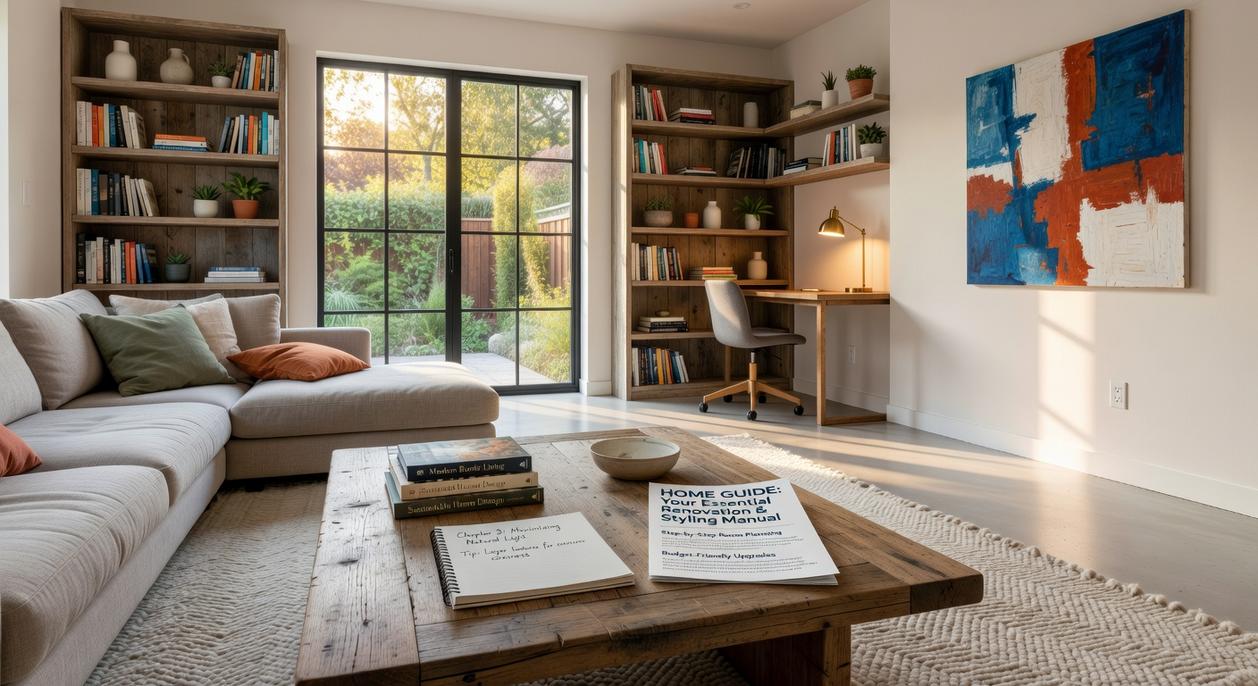
Your home’s exterior is the first thing people see.
And whether you’re selling or just want your neighbors to stop side-eyeing your peeling paint, curb appeal matters.
Your Front Door Facelift
I painted my front door navy blue last spring. Cost me about $40 and three hours of my Saturday.
My neighbor asked if I’d hired a designer.
Here’s what you need to know. Pick a color that pops against your siding. Deep reds work great on white houses. Black looks sharp on brick. Navy or forest green? Those work on almost anything.
While you’re at it, swap out that brass handle from 1987. A new brushed nickel or matte black handle runs about $30 at the hardware store. Same with house numbers.
The payoff? Your entry looks intentional instead of forgotten.
Landscaping for a Lush Look
You don’t need to spend every weekend weeding.
I learned this the hard way after killing three flower beds in two years (turns out high-maintenance annuals hate neglect).
Start with clean edges. A $15 edging tool and 20 minutes will make your beds look professionally maintained. Add two inches of fresh mulch. It stops weeds and makes everything look tidy.
Then plant perennials that actually survive. Black-eyed Susans, coneflowers, and hostas come back every year without babysitting.
The Magic of a Power Washer
I borrowed my dad’s power washer last month.
My driveway went from dingy gray to almost new in about an hour. Same with my vinyl siding and front walkway.
You can rent one for around $50 a day. Just keep the nozzle moving and don’t get too close to wood or you’ll gouge it.
For more home care strategies, check out the house guide mrshometips for room-specific tips.
The result? Your whole property looks cared for instead of slowly decaying.
Smart Maintenance: The Proactive Homeowner’s Guide
Look, I’m not going to sugarcoat this.
Most homeowners wait until something breaks before they do anything about it. Then they’re stuck with a $3,000 repair bill that could’ve been avoided with 20 minutes of work.
According to the National Association of Home Builders, regular maintenance can extend your home’s lifespan by up to 50%. That’s not a small number.
Here’s what actually works.
Spring
• Check your AC before the heat hits
• Clean windows inside and out
• Inspect your roof for winter damage
Summer
• Look over your deck for loose boards
• Test your sprinkler system
• Clear debris from outdoor drains
Fall
• Clean those gutters (yes, really)
• Check weatherstripping on doors
• Drain outdoor faucets before the freeze
Winter
• Look for drafts around windows
• Test your heating system
• Keep an eye on ice dams
Water damage costs American homeowners over $13 billion annually. Most of it? Completely preventable.
Check under your sinks every few months. Feel around the pipes. If it’s wet, you’ve got a problem. Fix it now before your subfloor rots out.
Make sure your downspouts point AWAY from your foundation. At least six feet away. Water pooling near your house will find a way in.
And for the love of everything, know where your main water shut-off valve is. When a pipe bursts at 2 AM, you don’t want to be searching for it with a flashlight while water floods your basement.
Here’s something nobody talks about.
Air leaks cost you more than you think. The Department of Energy found that sealing gaps around windows and doors can cut heating and cooling costs by 20%.
Grab some caulk and weatherstripping. Spend an afternoon sealing those gaps. Your utility bill will thank you.
The Mrshometips house guide by masterrealtysolutions breaks this down even further if you want to dig deeper into how to sell a property successfully mrshometips.
Because here’s the truth: a well-maintained home doesn’t just save you money on repairs. It holds its value better when you’re ready to move on.
From House to Dream Home, One Step at a Time
You came here feeling stuck.
Too many ideas and not enough direction. I get it because I’ve been there too.
This guide gave you a framework to move forward. You don’t need to tackle everything at once or spend a fortune to see real change.
The overwhelm stops now. You have a plan.
Smart planning works. High-impact upgrades work. Proactive maintenance works. When you combine these three things, you create a home that feels right while protecting what you’ve invested.
Here’s your next move: Pick one small project from the mrshometips house guide by masterrealtysolutions. Update your cabinet hardware. Paint your front door. Something you can finish this weekend.
That’s how transformation starts. One project at a time.
Your home is waiting for you to begin.
 Founder & Creative Director
There is a specific skill involved in explaining something clearly — one that is completely separate from actually knowing the subject. Kaelith Kryndall has both. They has spent years working with highlight hub in a hands-on capacity, and an equal amount of time figuring out how to translate that experience into writing that people with different backgrounds can actually absorb and use.
Kaelith tends to approach complex subjects — Highlight Hub, Home Care Strategies and Fixes, Useful Stuff being good examples — by starting with what the reader already knows, then building outward from there rather than dropping them in the deep end. It sounds like a small thing. In practice it makes a significant difference in whether someone finishes the article or abandons it halfway through. They is also good at knowing when to stop — a surprisingly underrated skill. Some writers bury useful information under so many caveats and qualifications that the point disappears. Kaelith knows where the point is and gets there without too many detours.
The practical effect of all this is that people who read Kaelith's work tend to come away actually capable of doing something with it. Not just vaguely informed — actually capable. For a writer working in highlight hub, that is probably the best possible outcome, and it's the standard Kaelith holds they's own work to.
Founder & Creative Director
There is a specific skill involved in explaining something clearly — one that is completely separate from actually knowing the subject. Kaelith Kryndall has both. They has spent years working with highlight hub in a hands-on capacity, and an equal amount of time figuring out how to translate that experience into writing that people with different backgrounds can actually absorb and use.
Kaelith tends to approach complex subjects — Highlight Hub, Home Care Strategies and Fixes, Useful Stuff being good examples — by starting with what the reader already knows, then building outward from there rather than dropping them in the deep end. It sounds like a small thing. In practice it makes a significant difference in whether someone finishes the article or abandons it halfway through. They is also good at knowing when to stop — a surprisingly underrated skill. Some writers bury useful information under so many caveats and qualifications that the point disappears. Kaelith knows where the point is and gets there without too many detours.
The practical effect of all this is that people who read Kaelith's work tend to come away actually capable of doing something with it. Not just vaguely informed — actually capable. For a writer working in highlight hub, that is probably the best possible outcome, and it's the standard Kaelith holds they's own work to.