
I’ve seen too many people turn their backyard oasis into a health hazard because they skipped basic safety steps.
You bought a hot tub to relax, not to worry about whether the water chemistry is off or if someone might get hurt. But here’s the thing: hot tubs need attention or they become risky fast.
hot tub safety mrshometips isn’t complicated. You just need to know what to watch for.
I’m going to walk you through everything that matters. Water chemistry, temperature settings, who should avoid hot tubs, and the maintenance tasks you can’t skip.
This guide comes from years of helping homeowners keep their spaces safe and functional. These aren’t theoretical tips. They’re the practical steps that actually work in real homes.
You’ll get a complete checklist by the end of this. Everything from testing your water to making sure kids stay safe around the tub.
No overwhelming science. No expensive equipment you don’t need. Just straightforward advice that keeps your hot tub relaxing instead of risky.
Mastering Water Chemistry: The Foundation of Hot Tub Safety
You know that moment when you lift the hot tub cover and get hit with that sharp chlorine smell?
That’s not what clean water should smell like.
I’m going to be honest with you. Most people think strong chemical odors mean their water is safe. But that burning smell actually tells you something’s off with your chemistry.
Some folks say you don’t need to test that often. They’ll tell you once a week is fine, or even just when the water looks cloudy. Why spend all that time with test strips?
Here’s what they’re missing.
Your hot tub water changes constantly. Every time someone gets in, they bring oils, lotions, and sweat. The temperature breaks down sanitizers faster than you’d think. Waiting until you see a problem means you’re already behind.
I test my water twice a week minimum. Takes maybe two minutes. You’re checking pH, total alkalinity, and sanitizer levels because these three things keep that water from turning into a bacteria playground.
When your pH drifts too high, the water feels slippery between your fingers. Too low and it gets that biting sting on your skin. You want it sitting between 7.2 and 7.8.
Now let’s talk sanitizers.
Chlorine works fast and costs less. You’ll smell it more though, and it burns off quicker in hot water. Bromine stays stable at high temps and has that gentler, almost sweet chemical scent. But it costs more and works slower.
Both do the job if you handle them right. Keep those chemicals in a cool, dry spot away from kids and pets. Never mix them directly together (the fumes alone can mess you up).
Here’s something most people don’t know about. Hot tub rash.
The medical term is Pseudomonas folliculitis. Sounds scary but it’s just a bacterial infection that shows up as red, itchy bumps a day or two after you soak. I’ve seen it happen when pH drops and sanitizer levels get lazy.
The bacteria loves warm, poorly balanced water. Feels like tiny pinpricks under your skin at first.
Balanced chemistry stops it cold.
Then there’s shocking your tub. People get confused about this part.
Shocking doesn’t mean dumping in extra sanitizer when the water looks gross. It’s about oxidizing all those organic compounds that regular sanitizer can’t touch. Dead skin cells, cosmetics, that stuff your filter misses.
You’ll notice the difference right away. The water goes from that dull, flat look to crystal clear. No more foaming when the jets kick on. The smell mellows out too.
I shock mine weekly, right after the heaviest use. Pour it in with the jets running and let it circulate for at least 20 minutes with the cover off.
Getting hot tub safety Mrshometips right isn’t complicated. You just need to stay consistent with testing and treat problems before they show up in your water or on your skin.
The Goldilocks Rule: Safe Temperatures and Soaking Times
Look, I love a good hot tub session as much as anyone.
But turning yourself into a human soup is not the vibe we’re going for here.
The 104°F (40°C) Limit
The CDC says keep your hot tub at 104°F max. Not because they’re fun police, but because your body starts doing weird things when it gets too hot.
Hyperthermia is what happens when your core temperature climbs too high. Your heart races. You get dizzy. In bad cases, you can pass out (and trust me, passing out in water is not on anyone’s bucket list).
Time Your Soak
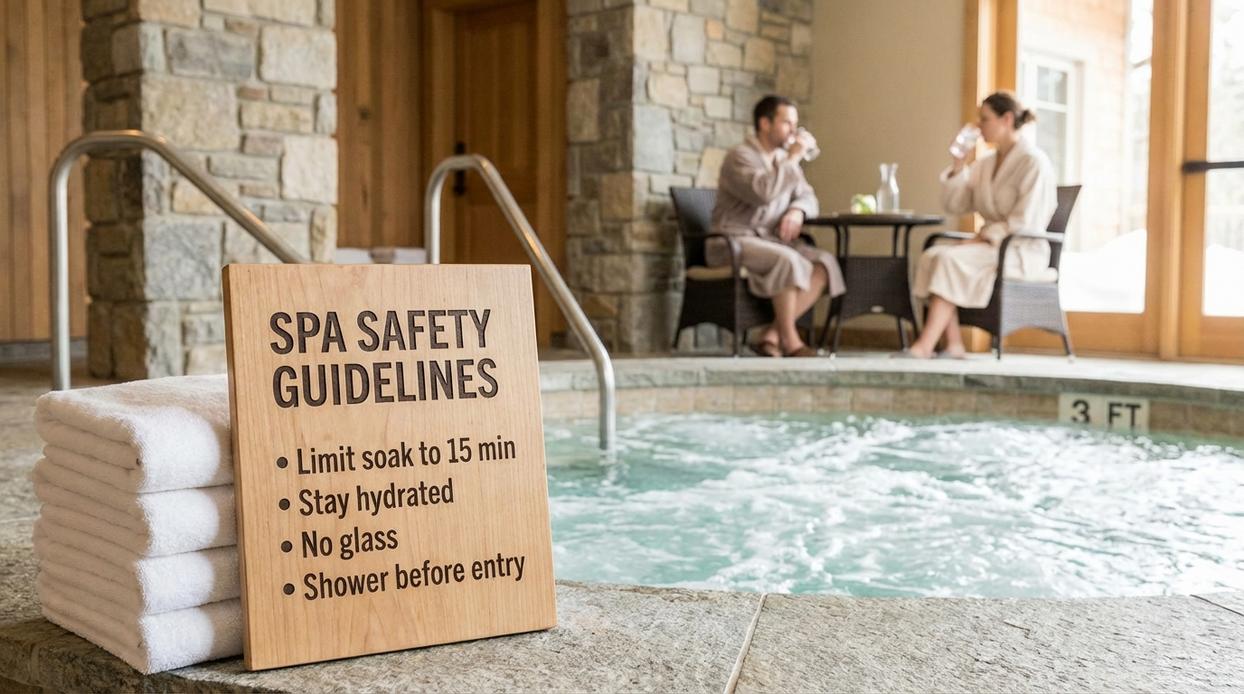
Here’s the deal. Stick to 15 to 20 minutes per session.
I know it feels amazing in there. But after about 20 minutes, your body starts waving red flags. Dizziness, nausea, that weird floaty feeling that’s not quite relaxation anymore.
Think of it like microwaving leftovers. There’s a sweet spot, and then there’s ruining dinner.
Hydration is Key
You’re sitting in hot water, so you can’t be dehydrating, right?
Wrong. So wrong.
Hot water makes you sweat (even if you don’t notice it). Drink water before you get in and after you get out. For more hot tub safety mrshometips, check out mrshometips where I cover everything from maintenance to smart usage habits.
Your future non-dizzy self will thank you.
Essential Equipment Checks: Electrical and Mechanical Safety
Your hot tub has safety features built in.
But here’s what most people don’t realize. Those features only work if you actually check them.
I’m talking about the stuff that prevents electrical shocks and keeps kids safe. The things you set up once and then forget about for years.
Let’s start with your GFCI.
Test Your GFCI Monthly
A Ground Fault Circuit Interrupter cuts power the second it detects an electrical problem. It’s the difference between a minor issue and a trip to the hospital.
Testing takes about 30 seconds.
Press the test button on your GFCI outlet. The reset button should pop out and your hot tub should lose power. Then press reset. Power comes back on.
If nothing happens when you press test? Call an electrician today.
Some people say monthly testing is overkill. They figure if it worked when they installed it, it’ll keep working forever.
But GFCIs can fail without warning. I’ve seen units that looked fine but stopped protecting against ground faults years ago.
Lock Down Your Cover
Your cover does two jobs. It keeps heat in (which saves you money) and it keeps people out (which saves lives).
A loose cover versus a locked cover? That’s the comparison that matters for hot tub safety mrshometips.
Kids can lift an unsecured cover in seconds. Pets can slip underneath. Both scenarios end badly.
Get a cover with locking straps or invest in a locking system. Then actually use it every single time.
Check Those Drains
Suction entrapment sounds like something from a horror movie. But it happens when drain covers crack or come loose.
Run your hand over each drain cover monthly. Feel for cracks or sharp edges. Make sure nothing wiggles.
Your drains should meet current safety standards from the Virginia Graeme Baker Pool and Spa Safety Act. Older covers? Replace them through your home plumbing guide mrshometips resources or a certified technician.
Safety Guidelines for Every User
I’ll be honest with you. For additional context, House Guide Mrshometips covers the related groundwork.
I learned about hot tub safety the hard way. Not from some manual or expert guide. From watching my nephew nearly pass out after 20 minutes in water that was way too hot for a seven-year-old.
That moment changed everything for me.
Children and Hot Tubs
Kids don’t regulate body temperature like we do. Their smaller bodies overheat faster than you’d think.
I never let children use a hot tub without an adult right there. Not in the house nearby. Right there at the tub.
Keep the water below 95°F for kids. And limit their time to 10 or 15 minutes max. (Yes, they’ll complain. But overheating isn’t worth it.)
Some parents say their kids are fine in regular hot tub temperatures. Maybe they’ve been lucky. But pediatricians disagree, and I’m not taking that risk with any child in my care.
Pregnancy and Health Conditions
Here’s what most people don’t realize about hot tub safety mrshometips. Pregnant women face real risks from elevated body temperatures.
Studies show that core body temperature above 101°F can affect fetal development, especially in the first trimester. That’s not me being overly cautious. That’s medical fact.
If you have heart disease, high blood pressure, or diabetes, talk to your doctor first. I know it sounds like generic advice. But hot water affects blood pressure and circulation in ways that can be dangerous if you have certain conditions.
Alcohol and Medications
This is where I see people make the biggest mistakes.
Mixing alcohol with hot tubs can cause drowsiness, disorientation, and dangerously low blood pressure. I’ve had friends who thought they were fine until they weren’t.
Same goes for medications that affect drowsiness or blood pressure. Pain meds, sleep aids, blood pressure medications. They don’t mix well with hot water.
You might think you can handle it. But your body doesn’t care what you think when your blood pressure drops and you lose consciousness in water.
Skip the drinks until after you’re done soaking. And if you’re on medication, check with your doctor or pharmacist about whether hot tub use is safe.
(And if you’re setting up your hot tub area, check out how to select the ideal end table mrshometips for practical placement ideas that keep essentials within reach.)
Creating a Safe Zone Around Your Hot Tub
I see it all the time.
People spend thousands on a beautiful hot tub and then forget about the area around it. That’s where most accidents happen (not in the water itself).
Start with the surface. For the full picture, I lay it all out in Home Plumbing Guide Mrshometips.
You need non-slip material around your tub. I’m talking about textured pavers or rubberized mats. The kind that actually grip wet feet instead of turning into an ice rink when someone steps out dripping.
Place mats at every exit point. Not just one side. Every spot where someone might climb out.
If your hot tub sits on a deck, add grip tape to the steps. It’s cheap and it works. I’ve used it on my own setup and it makes a real difference when you’re walking around in the dark.
Light it up properly.
Nighttime soaks are great until someone trips over the stairs they can’t see. Install low-voltage pathway lights around the perimeter. Solar ones work fine if you don’t want to mess with wiring.
Put a light near the steps. That’s where people need to see most.
Ditch the glass.
This one’s simple but people ignore it. Use plastic cups and bottles only. I don’t care how nice your wine glasses are. One slip and you’ve got shards in the water or embedded in someone’s foot.
Keep a basket of plastic drinkware nearby so guests don’t bring glass from inside. For more ways to keep your space safe and functional, check out hot tub safety mrshometips.
Handrails help too. Especially if older folks or kids use your tub. Mount one near the entry point.
Make Safety a Part of Your Relaxation Routine
You now have a complete checklist to keep your hot tub safe.
I know you bought your hot tub to relax. But a poorly maintained one can turn that luxurious escape into a health hazard real fast.
Nobody wants to deal with skin infections or electrical issues when they’re trying to unwind after a long day.
The good news is that these simple chemical, electrical, and procedural checks eliminate most common risks. You just need to make them part of your routine.
Here’s what I want you to do today: Pick one safety check and do it right now. Test your GFCI or check your sanitizer levels. It takes two minutes.
That’s how you build safe habits. One small check at a time.
Your hot tub should be a place where you feel good, not worried. Following hot tub safety mrshometips keeps it that way.
Start with that one check today. Your future self will thank you.
 Founder & Creative Director
There is a specific skill involved in explaining something clearly — one that is completely separate from actually knowing the subject. Kaelith Kryndall has both. They has spent years working with highlight hub in a hands-on capacity, and an equal amount of time figuring out how to translate that experience into writing that people with different backgrounds can actually absorb and use.
Kaelith tends to approach complex subjects — Highlight Hub, Home Care Strategies and Fixes, Useful Stuff being good examples — by starting with what the reader already knows, then building outward from there rather than dropping them in the deep end. It sounds like a small thing. In practice it makes a significant difference in whether someone finishes the article or abandons it halfway through. They is also good at knowing when to stop — a surprisingly underrated skill. Some writers bury useful information under so many caveats and qualifications that the point disappears. Kaelith knows where the point is and gets there without too many detours.
The practical effect of all this is that people who read Kaelith's work tend to come away actually capable of doing something with it. Not just vaguely informed — actually capable. For a writer working in highlight hub, that is probably the best possible outcome, and it's the standard Kaelith holds they's own work to.
Founder & Creative Director
There is a specific skill involved in explaining something clearly — one that is completely separate from actually knowing the subject. Kaelith Kryndall has both. They has spent years working with highlight hub in a hands-on capacity, and an equal amount of time figuring out how to translate that experience into writing that people with different backgrounds can actually absorb and use.
Kaelith tends to approach complex subjects — Highlight Hub, Home Care Strategies and Fixes, Useful Stuff being good examples — by starting with what the reader already knows, then building outward from there rather than dropping them in the deep end. It sounds like a small thing. In practice it makes a significant difference in whether someone finishes the article or abandons it halfway through. They is also good at knowing when to stop — a surprisingly underrated skill. Some writers bury useful information under so many caveats and qualifications that the point disappears. Kaelith knows where the point is and gets there without too many detours.
The practical effect of all this is that people who read Kaelith's work tend to come away actually capable of doing something with it. Not just vaguely informed — actually capable. For a writer working in highlight hub, that is probably the best possible outcome, and it's the standard Kaelith holds they's own work to.