I’ve seen too many homeowners deal with burst pipes at 2am or come home to a flooded kitchen.
You’re probably here because you want to avoid those nightmare scenarios. Smart move.
Here’s the thing: most plumbing disasters don’t just happen. They give you warning signs. But if you don’t know what to look for or when to check, you’ll miss them.
I put together this home plumbing guide mrshometips after years of learning what actually prevents problems. Not the stuff that sounds good in theory. The things that work in real homes.
This isn’t about becoming a plumber. It’s about catching small issues before they turn into expensive emergencies.
You’ll get a simple checklist you can follow. No special tools needed. No technical jargon. Just practical steps that protect your home and your wallet.
The advice here comes from hands-on experience with what really prevents disasters. I’m not guessing at this stuff.
By the end, you’ll know exactly what to check, when to check it, and what to do if something looks off.
Let’s keep your home leak-free.
Why A Little Maintenance Prevents a Major Mess
You know what nobody talks about?
The real cost of a plumbing failure isn’t the repair bill. It’s everything that comes after.
I’m talking about water damage to your floors. Mold growing behind your walls. Having to move out for a week while contractors rip apart your bathroom.
Some people say you should just deal with plumbing problems when they happen. Why waste time on maintenance when everything seems fine? They figure if it’s not broken, don’t touch it.
But here’s what that approach misses.
That slow drip under your sink? It’s wasting hundreds of gallons every month. And it’s telling you something is about to fail.
I’ve seen what happens when people ignore the small stuff. A $20 washer replacement turns into a $5,000 water damage claim.
Here’s what regular maintenance actually does for you:
- Keeps your water bills from creeping up (those drips add up faster than you think)
- Stops small problems before they become emergencies at 2am on a Sunday
- Protects your home’s value because water damage is one of the fastest ways to tank it
The home plumbing guide Mrshometips approach is simple. You spend 20 minutes a month checking a few key spots. That’s it.
No special tools needed. No plumber required for basic checks.
What you get back is peace of mind. And a system you actually understand instead of one that makes you nervous every time you hear a weird noise.
The Essential DIY Plumbing Toolkit: What You Actually Need
Ever stood in the plumbing aisle at Home Depot feeling completely lost?
You’re staring at rows of wrenches and weird tools you can’t even name. And you’re wondering if you need to drop $500 just to fix a leaky faucet.
Here’s what nobody tells you.
You don’t need a professional’s toolbox. A small set of tools can handle most of the stuff that goes wrong in your home.
I’m talking about 90% of minor issues and all basic maintenance.
The Must-Haves
Start with two plungers. Yes, two. A cup plunger works for sinks. A flange plunger is what you need for toilets. (They’re not interchangeable, no matter what your roommate says.)
Grab a pair of tongue-and-groove pliers. Most people call them Channellocks. You’ll use these more than you think.
Add an adjustable wrench and a small handheld drain snake. That’s your auger for when hair clogs up your shower drain.
The Supporting Cast
Keep a sturdy bucket around. Old towels too. And get yourself a decent flashlight because plumbing problems never happen in well-lit areas.
That’s it.
This whole setup usually costs under $100. But it can save you thousands in emergency plumber fees over the years.
Think about it. One weekend call to a plumber can run you $300 just to show up. And that’s before they fix anything.
Pro tip: Buy your tools before you need them. Trust me on this. Shopping for a plunger at 10 PM when your toilet is overflowing is not fun. We break this down even more in Hot Tub Safety Mrshometips.
Want more guidance on tackling home repairs yourself? Check out our complete home plumbing guide mrshometips for step-by-step walkthroughs.
The truth is most plumbing fixes aren’t complicated. They’re just unfamiliar. Once you have the right tools and know what to do, you’ll wonder why you ever hesitated.
Your Monthly 15-Minute Plumbing Walkthrough
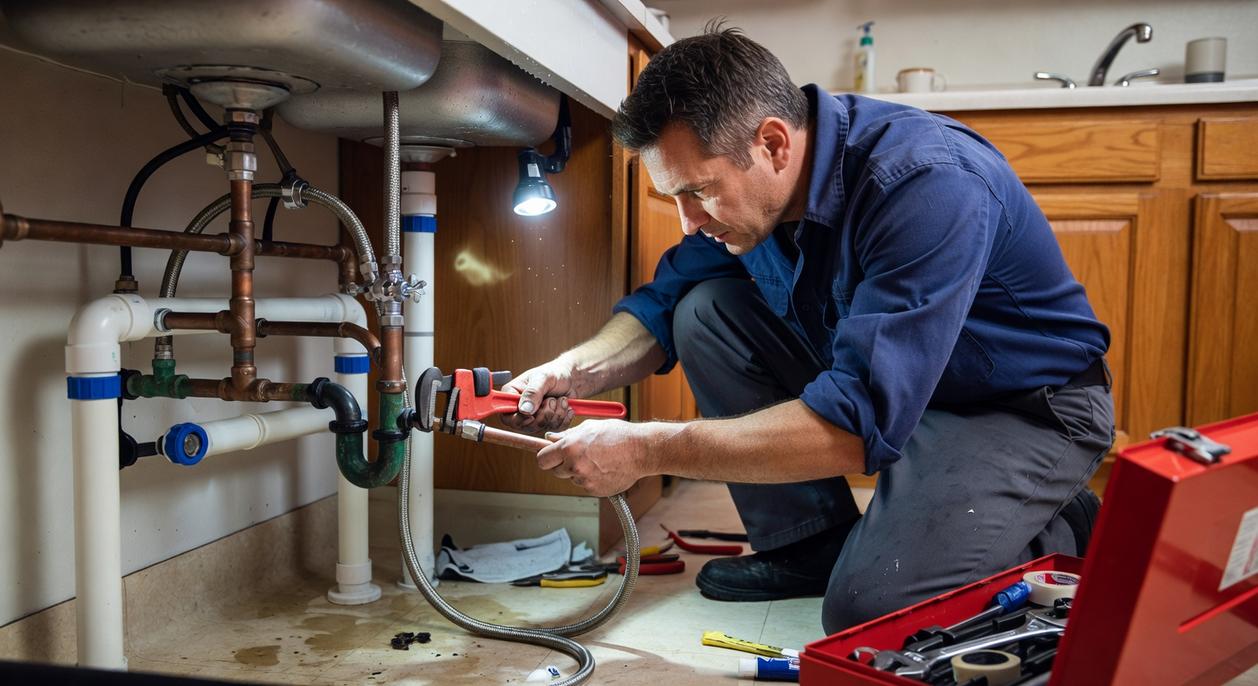
You don’t need to be a plumber to catch problems early.
I’m going to walk you through a simple monthly routine that takes about 15 minutes. It’s the same one I use in my own home, and it’s saved me from some pretty expensive repairs.
Most plumbing disasters don’t just happen overnight. There are usually warning signs weeks or even months before things go bad.
The trick is knowing where to look.
In the Kitchen:
Grab a flashlight and open the cabinet under your sink. Look for moisture, drips, or any dark staining on the cabinet floor. Even a small leak can turn into mold if you ignore it.
Run your garbage disposal for 30 seconds with cold water. It should drain quickly. If it doesn’t, you’ve got a clog forming.
In the Bathrooms:
Check every faucet. I mean really check them. Turn each one on and off, then listen. If you hear water running after you’ve turned it off, that’s a problem.
Here’s a trick most people don’t know about. Drop a few drops of food coloring into your toilet tank. Wait 15 minutes without flushing. If color shows up in the bowl, your flapper is leaking. (You’d be surprised how common this is.)
Pay attention to how fast your drains are moving. Slower than usual means something’s building up.
Utility & Laundry Room:
Take a look at the temperature and pressure relief valve on your water heater. Any drips there need attention fast.
Check your washing machine hoses. Look for bulges, cracks, or moisture where they connect. These hoses fail more often than you’d think, and when they do, it’s a flood.
That’s it. Fifteen minutes once a month. I tackle the specifics of this in How to Prevent Blocked Drains Mrshometips.
If you’re getting ready to move and want your how to sell a property successfully mrshometips in top shape, this home plumbing guide mrshometips routine will help you spot issues before a buyer’s inspector does.
Most people skip these checks until something breaks. Don’t be most people.
Seasonal Maintenance: Your Year-Round Plumbing Calendar
Most people wait until something breaks to think about their plumbing.
Then winter hits and a pipe bursts in the attic. Or spring rains flood the basement because the sump pump died months ago.
I’m going to walk you through a simple calendar that keeps your plumbing working all year. No guesswork about when to do what.
Some folks say seasonal maintenance is overkill. They argue that modern plumbing systems are built to last and don’t need all this fussing. Just call a plumber when something goes wrong.
Here’s what that thinking misses.
A burst pipe doesn’t just cost you the repair bill. It costs you the water damage, the insurance claim, and the week of chaos while contractors tear apart your walls.
Prevention takes maybe an hour per season. Repairs take days and thousands of dollars.
Let me break down what you need to do and when.
Autumn (Preparing for Winter)
This is about protecting your pipes before the first freeze.
- Disconnect and drain all outdoor garden hoses. Water left inside will freeze and crack the faucet.
- Shut off the water supply to exterior faucets from inside your home.
- Insulate exposed pipes in crawl spaces, attics, and garages. (Foam sleeves from the hardware store work fine.)
Spring (Thawing and Rains)
Now you’re reversing winter prep and getting ready for heavy rain.
- Turn exterior faucets back on and check for leaks.
- Test your sump pump by pouring a bucket of water into the pit. It should kick on right away.
- Clear gutters and downspouts so water flows away from your foundation.
Summer (Annual Check-up)
This is when you handle the stuff you can’t see.
Consider professional drain cleaning for your main lines. If you have mature trees, roots grow into pipes slowly over years. You won’t notice until you have a backup.
Think of this home plumbing guide mrshometips approach like changing your car’s oil. Boring but necessary.
I check my hot tub safety mrshometips setup during summer too since that’s when we use it most.
The whole calendar takes maybe four hours total across the entire year. That’s less time than dealing with one emergency repair.
Taking Control of Your Home’s Health
You now have a complete framework for maintaining your home’s plumbing and preventing costly surprises.
This proactive approach is the best way to avoid the stress and expense of a sudden pipe burst or sewer backup. Major leaks don’t have to catch you off guard.
I know you’re busy. That’s why this works.
By investing just a few minutes each month, you keep your home’s systems running smoothly. No complicated schedules or expensive tools required.
You came here to protect your home from plumbing disasters. Now you know exactly how to do it.
Don’t wait for a problem to show up. Start today by performing the 15-minute walkthrough we covered earlier.
Check your visible pipes. Look under sinks. Test your water pressure. These simple steps put you ahead of most homeowners.
You’re now in control of your home’s plumbing health. That peace of mind is worth more than any emergency repair bill you’ll avoid.
The home plumbing guide mrshometips gives you everything you need to stay on track. Use it as your reference whenever questions come up.
Your home takes care of you. Now you can take care of it.
 Founder & Creative Director
There is a specific skill involved in explaining something clearly — one that is completely separate from actually knowing the subject. Kaelith Kryndall has both. They has spent years working with highlight hub in a hands-on capacity, and an equal amount of time figuring out how to translate that experience into writing that people with different backgrounds can actually absorb and use.
Kaelith tends to approach complex subjects — Highlight Hub, Home Care Strategies and Fixes, Useful Stuff being good examples — by starting with what the reader already knows, then building outward from there rather than dropping them in the deep end. It sounds like a small thing. In practice it makes a significant difference in whether someone finishes the article or abandons it halfway through. They is also good at knowing when to stop — a surprisingly underrated skill. Some writers bury useful information under so many caveats and qualifications that the point disappears. Kaelith knows where the point is and gets there without too many detours.
The practical effect of all this is that people who read Kaelith's work tend to come away actually capable of doing something with it. Not just vaguely informed — actually capable. For a writer working in highlight hub, that is probably the best possible outcome, and it's the standard Kaelith holds they's own work to.
Founder & Creative Director
There is a specific skill involved in explaining something clearly — one that is completely separate from actually knowing the subject. Kaelith Kryndall has both. They has spent years working with highlight hub in a hands-on capacity, and an equal amount of time figuring out how to translate that experience into writing that people with different backgrounds can actually absorb and use.
Kaelith tends to approach complex subjects — Highlight Hub, Home Care Strategies and Fixes, Useful Stuff being good examples — by starting with what the reader already knows, then building outward from there rather than dropping them in the deep end. It sounds like a small thing. In practice it makes a significant difference in whether someone finishes the article or abandons it halfway through. They is also good at knowing when to stop — a surprisingly underrated skill. Some writers bury useful information under so many caveats and qualifications that the point disappears. Kaelith knows where the point is and gets there without too many detours.
The practical effect of all this is that people who read Kaelith's work tend to come away actually capable of doing something with it. Not just vaguely informed — actually capable. For a writer working in highlight hub, that is probably the best possible outcome, and it's the standard Kaelith holds they's own work to.