I’ve dealt with more clogged drains than I care to remember.
You’re probably here because your sink is draining slower each day or your shower is turning into a bathtub. Maybe you’re tired of that smell coming from the pipes.
Here’s what I know: most drain problems are easy to prevent. And when they do happen, you don’t need harsh chemicals or a plumber to fix them.
This guide shows you how to prevent blocked drains mrshometips with simple daily habits and quick fixes that actually work. I’m talking about real solutions I’ve used in my own home for years.
You’ll learn what causes drains to clog in the first place (it’s not always what you think). Then I’ll walk you through easy prevention steps and DIY clearing methods that take minutes.
No fancy tools required. No expensive products.
These are practical techniques that keep your kitchen and bathroom drains flowing freely. The kind of maintenance that saves you from standing in ankle-deep shower water or dealing with a backed-up sink on a Sunday night.
You can start using these tips today.
The Best Defense: Simple Preventative Habits
You know what’s cheaper than calling a plumber?
Not needing one in the first place.
I’m going to be straight with you. Most drain clogs happen because we ignore the small stuff. A little hair here. Some grease there. Before you know it, you’re standing in ankle-deep shower water wondering what went wrong.
The good news? You can stop most clogs before they start.
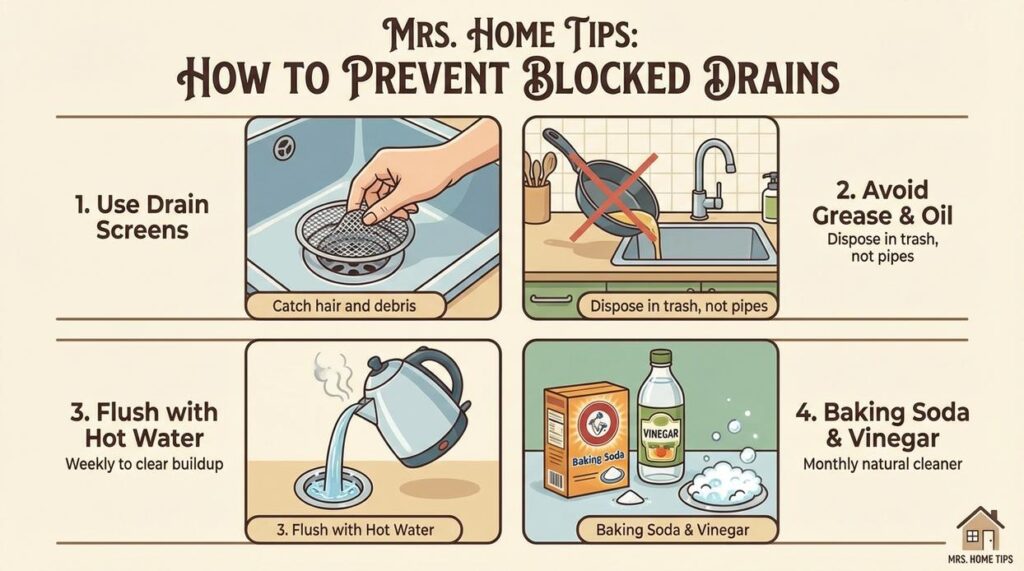
Use drain strainers. This is the easiest win you’ll get. For your kitchen sink, grab a mesh strainer. They catch food particles without slowing down water flow. In the bathroom, get a hair catcher for your shower and tub. (Trust me, you don’t want to see how much hair goes down there in a week.)
Scrape your plates before rinsing. I mean really scrape them. Get the sauces, the oils, the little bits of food into the trash. Even tiny particles add up over time and turn into that gross sludge that blocks your pipes.
Some people say their garbage disposal handles everything. Maybe it does. But why risk it when scraping takes five seconds?
Run hot water after each use. When you’re done washing dishes, let hot water run for about 15 seconds. It melts fresh grease and pushes it through before it can stick to your pipes and harden.
Do a weekly boiling water flush. Once a week, boil a kettle and pour it down each drain. (If you have PVC pipes, use very hot tap water instead.) This dissolves soap scum and grease that’s starting to build up.
That’s how to prevent blocked drains Mrshometips style. Nothing fancy. Just consistent habits that actually work.
Your Go-To Natural Cleaning Arsenal: DIY Drain Solutions
You don’t need harsh chemicals to keep your drains flowing.
I’ve tested dozens of natural methods over the years and these three work better than most store-bought cleaners. Plus they won’t eat through your pipes or fill your house with fumes.
The Classic Method: Baking Soda & Vinegar
Start with half a cup of baking soda. Pour it straight down the drain.
Follow it with half a cup of white vinegar. You’ll hear it fizz and bubble. That’s the acid in the vinegar reacting with the alkaline baking soda, breaking down soap scum and grime stuck to your pipe walls.
Let it sit for 15 to 30 minutes. Then flush everything with hot water.
The reaction creates carbon dioxide gas that helps dislodge buildup. It’s basic chemistry but it works.
For Greasy Buildup: Salt & Hot Water
Grease is stubborn. It cools and hardens inside your pipes.
Pour half a cup of table salt down the drain. Let it sit for 20 minutes. The coarse texture acts like sandpaper on your pipe walls, scrubbing away the sticky residue.
Flush with hot water. The heat melts the grease while the salt scrubs it loose.
This is how to prevent blocked drains mrshometips style without calling a plumber.
Deodorize with Lemon
After you’ve cleaned the drain, tackle the smell.
Run a few lemon peels through your garbage disposal. Or pour fresh lemon juice down the drain if you don’t have a disposal.
The citric acid cuts through remaining residue and leaves everything smelling clean. No fake fragrance needed.
Know Your Enemy: Tackling Kitchen vs. Bathroom Drains

Not all clogs are created equal.
I learned this the hard way after spending an entire Saturday plunging a bathroom drain with the same method I’d used on my kitchen sink the week before. Spoiler alert: it didn’t work.
Here’s what most people don’t realize. The gunk blocking your kitchen drain is completely different from what’s choking your bathroom pipes. And that means you need different strategies for each.
Kitchen Sink Clogs: The Grease Zone
Your kitchen drain has one main enemy. Grease.
Sure, coffee grounds and pasta don’t help. But it’s the fats and cooking oils that create the real problems. They coat your pipes like a waxy film that catches everything else flowing through.
Some people say it’s fine to pour grease down the drain if you run hot water after. They figure the heat keeps everything liquid until it’s gone.
Wrong.
That grease cools down eventually. Usually right inside your pipes where you can’t see it. Then it hardens and you’ve got a mess.
Here’s what actually works:
- Never pour fats or cooking oils down the drain (not even with hot water)
- Run cold water when using your garbage disposal
- Let coffee grounds go in the trash instead
The cold water trick surprises people. But it keeps fats solid so your disposal can chop them up and wash them away before they stick to anything.
Bathroom Drains: The Hair Trap
Walk into any bathroom and you’ll find the same culprit. Hair.
It tangles around the drain stopper. It wraps around itself. And then soap scum glues the whole thing together into a disgusting mat that blocks water flow.
I pull hair out of my bathroom drain every week now. Takes maybe thirty seconds. But it saves me from dealing with a full clog later.
The baking soda and vinegar method works great here because it breaks down that soap scum binding. Once the glue dissolves, the hair washes away easier.
Want to know how to prevent blocked drains mrshometips style? Match your method to your drain type. Kitchen gets the no-grease rule and cold water. Bathroom gets weekly hair removal and regular soap scum treatment.
Different problems need different solutions. It’s that simple. Home Plumbing Guide Mrshometips picks up right where this leaves off.
The Official ‘Do Not Drain’ List: Common Household Mistakes
You know what drives me crazy?
When someone tells me their drain is clogged and they have no idea why. Then I ask what they’ve been putting down there.
The answer is usually everything.
Look, I’m not here to judge. Most people don’t know what actually causes blockages. They think if it fits down the drain, it’s fine.
It’s not fine.
Some folks argue that garbage disposals can handle anything. They say if you run enough water, everything will wash away. I’ve heard this from homeowners who swear they’ve never had problems.
But here’s what they’re missing. Just because you haven’t had a clog yet doesn’t mean you won’t. Those pipes are collecting debris right now. You just can’t see it happening.
Let me show you what’s actually wrecking your drains. The Secrets of Property Sales Mrshometips builds on the same ideas we are discussing here.
Fats, Oils, and Grease (FOG)
This is the worst stuff you can pour down a drain.
When grease is hot, it flows like water. But once it cools inside your pipes, it turns solid. Then it acts like glue for everything else that goes down there.
You end up with a sticky mess that catches food particles and builds up over time.
Coffee Grounds
They seem harmless. They’re small and wet.
But coffee grounds don’t dissolve. They clump together in your P-trap and create dense blockages that are a pain to clear out.
Just toss them in the trash or use them in your garden.
‘Flushable’ Wipes
This is the biggest lie in the plumbing world.
These wipes don’t break down like toilet paper. They stay intact and cause major sewer line issues. I’ve seen them back up entire systems.
If you want to learn how to prevent blocked drains mrshometips style, stop flushing these immediately.
Eggshells and Produce Stickers
Eggshells have a thin membrane that can wrap around other debris in your pipes. The shells themselves might seem small, but they add up.
Produce stickers don’t dissolve at all. They stick to pipe walls and create rough spots where other stuff can catch.
Skip the Harsh Chemicals
I know it’s tempting to grab a bottle of chemical drain cleaner when things slow down.
But those products can corrode your pipes. They’re a last resort, not a first line of defense.
The methods I share in this house guide mrshometips are safer for your plumbing and work better long term anyway.
Enjoy Clear Drains and Peace of Mind
You now have everything you need to keep your drains flowing smoothly.
No more standing in ankle-deep water during your morning shower. No more panic when the kitchen sink backs up right before dinner guests arrive.
The strategies I’ve shared work because they stop clogs before they start. You’re not just treating symptoms anymore. You’re fixing the actual problem at its source.
That’s what makes this approach different. Prevention beats emergency plumbing calls every single time.
Here’s your next move: Pick one habit from this guide and start using it this week. A drain strainer is the easiest place to begin (it takes about 30 seconds to install).
Once that becomes routine, add another preventative step. Then another.
Small changes add up fast. Before you know it, drain problems become a thing of your past.
Want more proven home care strategies that actually work? Check out how to prevent blocked drains mrshometips for additional tips and room-specific solutions that keep your entire home running smoothly.
Your drains will thank you. So will your wallet.
 Founder & Creative Director
There is a specific skill involved in explaining something clearly — one that is completely separate from actually knowing the subject. Kaelith Kryndall has both. They has spent years working with highlight hub in a hands-on capacity, and an equal amount of time figuring out how to translate that experience into writing that people with different backgrounds can actually absorb and use.
Kaelith tends to approach complex subjects — Highlight Hub, Home Care Strategies and Fixes, Useful Stuff being good examples — by starting with what the reader already knows, then building outward from there rather than dropping them in the deep end. It sounds like a small thing. In practice it makes a significant difference in whether someone finishes the article or abandons it halfway through. They is also good at knowing when to stop — a surprisingly underrated skill. Some writers bury useful information under so many caveats and qualifications that the point disappears. Kaelith knows where the point is and gets there without too many detours.
The practical effect of all this is that people who read Kaelith's work tend to come away actually capable of doing something with it. Not just vaguely informed — actually capable. For a writer working in highlight hub, that is probably the best possible outcome, and it's the standard Kaelith holds they's own work to.
Founder & Creative Director
There is a specific skill involved in explaining something clearly — one that is completely separate from actually knowing the subject. Kaelith Kryndall has both. They has spent years working with highlight hub in a hands-on capacity, and an equal amount of time figuring out how to translate that experience into writing that people with different backgrounds can actually absorb and use.
Kaelith tends to approach complex subjects — Highlight Hub, Home Care Strategies and Fixes, Useful Stuff being good examples — by starting with what the reader already knows, then building outward from there rather than dropping them in the deep end. It sounds like a small thing. In practice it makes a significant difference in whether someone finishes the article or abandons it halfway through. They is also good at knowing when to stop — a surprisingly underrated skill. Some writers bury useful information under so many caveats and qualifications that the point disappears. Kaelith knows where the point is and gets there without too many detours.
The practical effect of all this is that people who read Kaelith's work tend to come away actually capable of doing something with it. Not just vaguely informed — actually capable. For a writer working in highlight hub, that is probably the best possible outcome, and it's the standard Kaelith holds they's own work to.